Yes, polyethylene is easily recyclable. In Germany, almost all plastics are collected, sorted, and recycled through the dual system.
Polyethylene (PE) is the most widely produced and used plastic in the world. Polyethylene accounts for the largest share of recycled plastics, followed by polypropylene (PP). Near-infrared technology allows the individual plastic types to be separated in sorting plants. Today, a purity of up to 98 percent is achieved, enabling high-quality recycling.
It can be melted down and processed into new products an unlimited number of times. In our in-house reclaim plant, over 95% of our production waste is processed into pure recyclate. The recyclate can be mixed with new PE. Depending on the application and requirements, this can vary from 20% to 100%. The recyclate is mainly used for garbage bag production, as well as for cover film, packaging film, or construction film. In Germany, 50% of plastic waste is melted down. The other half is converted into electricity in waste incineration plants without leaving any residue.
Advantages of PE recycling:
Reduction in waste volume: Recycling reduces the amount of PE in landfills.
Resource conservation: Less energy and new raw materials are required to manufacture PE products.
Circular economy: The recycled material can be returned to the production cycle.
Forms of PE recycling:
Material recycling: The PE is recycled into granules or ground material, which are used to manufacture new products.
Feedstock recycling: The PE is broken down into its chemical components, from which new plastics can then be manufactured.
Challenges:
Purity of sorting: Impurities in PE can complicate recycling and impair the quality of the recyclate.
Sorting: Efficient sorting of PE from mixed plastic waste is important for high-quality recycling.
Here is a more detailed explanation of the types of recyclates:
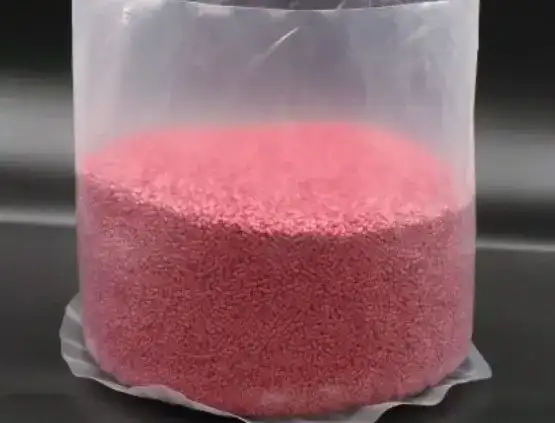
Post-Consumer Recyclate (PCR) This recyclate is obtained from used LDPE products collected in municipal waste or through other collection systems. The process involves collecting, cleaning, shredding, and granulating the used LDPE items to produce new material for the production of packaging and other products.
Post-Industrial Recyclate (PIR) This recyclate comes from production waste generated during the manufacture of LDPE products. This waste is often cleaner and more homogeneous than PCR because it comes directly from the production process. It is also cleaned and processed into granules to be returned to the production cycle.
natural transparent - straight edges and neatly trimmed - without slip - 400 linear meters/roll - wound on a cardboard tube with a 76 mm core -
10.019
310 Ro.
50
0
70µ
LDPE
Flat Bags
natural transparent - with slip - 1 side, 1 color "BLUE" printed, bottom edge of print 30 mm above weld seam -
77.739
9.875 St.
180
410
100µ
LDPE
Flat Bags
natural transparent - with lubricant - S. welding - 1A product -
10.012
7.500 St.
235
280
180µ
LDPE
Flat Bags
Natural transparent - without slip -
77.504
700 St.
240
400
100µ
LDPE
Flat Bags
natural transparent - with antistatic agent - specific surface resistance less than or equal to 10 to the power of 11 square Ohm -
77.093
150 St.
1.000
1.600
90µ
LDPE
Flat Bags
natural transparent - without slip - S.welding - 50 pieces in a small box -
74.882
300 St.
1.000
1.800
80µ
LDPE
Folded Films on roll
Natural - with antistatic agent according to TRGS 727 - fire protection film - flame-retardant according to DIN 4102 - CAT B1 - 30 meters on the roll - cardboard tube 76 mm core
76.001
1 Ro.
3.600
0
160µ
LDPE
Folded Films on roll
natural transparent - 4000/2000 mm - 50 running meters per roll - wound on a core with a 76 mm cardboard core - roll weight approximately 28 kg -
76.769
2 Ro.
4.000
0
150µ
LDPE
Film Cuts
natural transparent - needled -
10.017
35.400 St.
280
280
100µ
LDPE
Tubes
Natural transparent - no additives - 150 linear meters/roll - wound on a cardboard tube with a 76 mm core - roll weight approximately 3 kg
77.064
28 Ro.
50
0
200µ
LDPE
Tubes
Natural transparent - with slip - 250 linear meters/roll - wound on a cardboard core with a 76 mm core -
77.942
7 Ro.
400
0
150µ
LDPE
Tubes
natural transparent - without lubricant - 100 meters on the roll - cardboard tube with roll core 76 mm - roll weight approx. 33 kg -
1.346
1 Ro.
1.750
0
100µ
LDPE
Box Hoods
Black, opaque, and UV stabilizer - Base dimensions 300 + 300 mm - assembled height 480 mm - in small boxes with inner bags -
76.868
200 St.
600
640
100µ
LDPE
Roundliner
natural transparent - with lubricant - diameter 320 mm - height 600 mm -
76.509
1.750 St.
515
630
50µ
LDPE
Flat Bag with side g
grey transparent coloured - with 240 mm inserted side fold - with S.welding -
1.242
1.000 St.
960
1.000
100µ
LDPE
Flat Bag with side g
blue transparent dyed - with 280 mm inserted side fold - With S.welding -
1.239
890 St.
1.140
1.200
100µ
LDPE
Flat Bag with side g
yellow transparent dyed - with 280 mm inserted side fold - With S.welding -
1.240
1.080 St.
1.140
1.200
100µ
LDPE
Flat Bag with side g
Natural transparent - with antistatic agent - with 275 mm inserted side fold - Specific surface resistance 10 to the power of 10 Square O
76.784
550 St.
1.300
1.000
90µ
LDPE
Flat Bags
Black opaque colored - conductive - surface resistance 10h6 square ohms - bundled in packs of 25 - with adhesive label "Warning"
77.698
5.000 St.
780
800
50µ
LDPE
Flat Bags
black colored - conductive - specific surface resistance less than or equal to 10 to the power of 7 square Ohm
77.340
1.910 St.
810
1.050
200µ
VFO
Flat Film/Tubes on r
Composite film inside black outside white - wound on rolls of 500 m - cardboard tubes with 76 mm core diameter -
10.014
3 Ro.
600
0
110µ
Trade only with traders.
Polymer-Synthese-Werk GmbH
47495 Rheinberg/Germany
Manufacturer of bags, films and tubes made of LDPE, MDPE and PP.